24/7 emergency response for storm-damaged trees, broken limbs, split trunks, uprooted trees, and fallen trees on structures across Phoenix, AZ and Maricopa County.
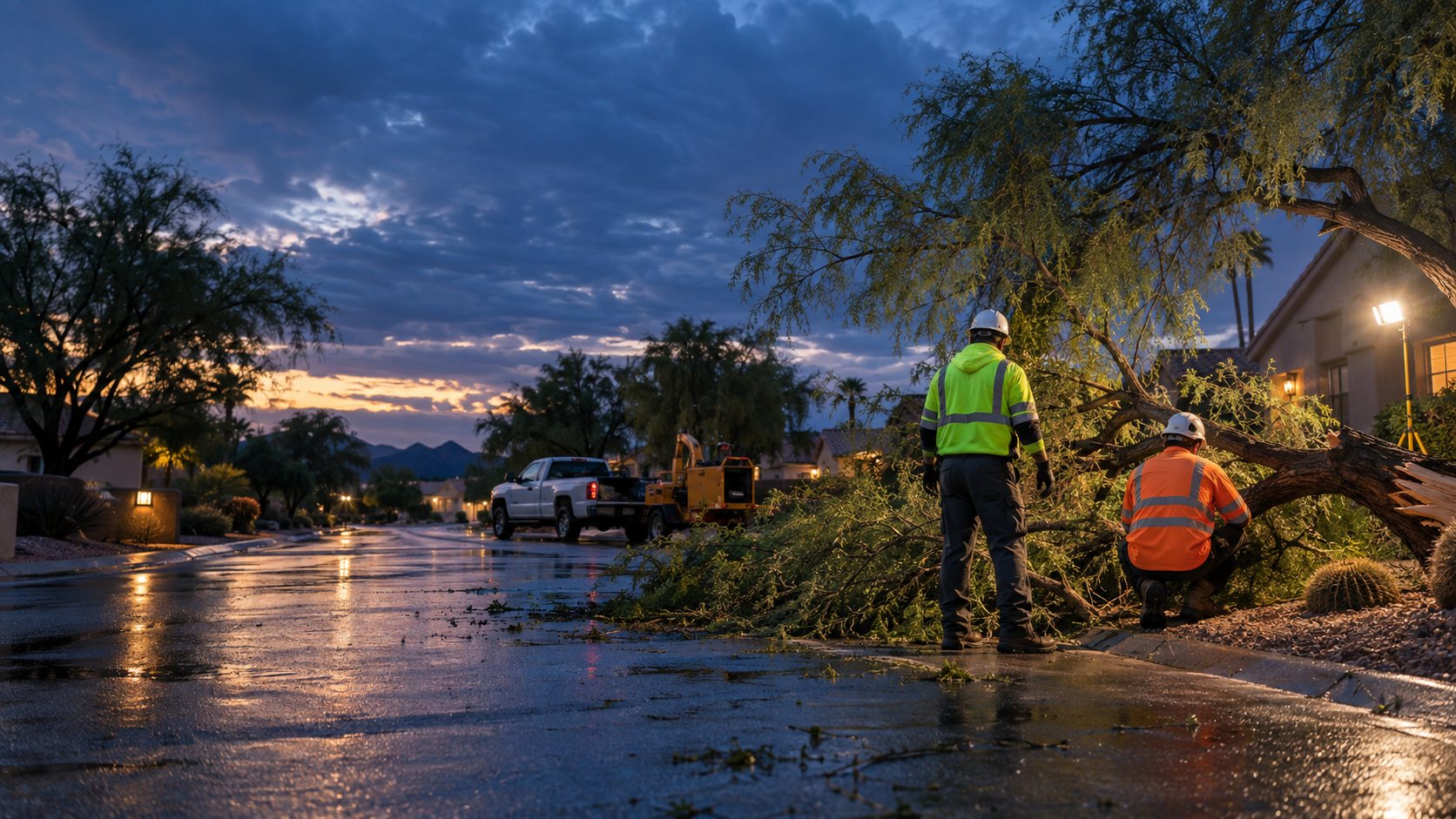
Phoenix, Arizona monsoons produce sudden, powerful wind gusts, microbursts, and heavy rain that can break limbs, split trunks, uproot trees, and send debris across properties within minutes. When a tree fails and threatens your home, vehicle, fence, or access  waiting until business hours is not an option.
Our emergency tree service team is available around the clock. We respond to hazardous tree situations with the goal of stabilizing the immediate danger, removing debris blocking access or threatening structures, and assessing the remaining tree for follow-up care. Emergency work focuses on safety first  securing the scene, protecting the property, and clearing the most urgent hazards before addressing secondary concerns.
After the emergency is stabilized, we evaluate the remaining tree structure and provide recommendations for follow-up pruning, tree removal, or monitoring. Some storm-damaged trees can be preserved through careful corrective pruning; others may need complete removal depending on the severity of the structural damage.
The following situations typically require prompt professional attention. If you encounter any of these, contact us immediately.
A tree or major branch that has landed on a roof, car, fence, or pool enclosure. The weight may cause progressive structural damage  prompt removal reduces the risk of further harm to the property.
A tree whose trunk has split or whose crown has partially separated. The remaining portion may be unstable and at risk of further collapse, particularly if wind or additional rain is expected.
A tree that has been partially or fully uprooted, with the root plate visibly lifted. Uprooted trees are inherently unstable and may continue to shift, especially in saturated soil conditions following monsoon rain.
Large branches that are broken but still suspended in the canopy. These limbs can fall unpredictably and should be removed before they drop onto people, vehicles, or walkways below.
Fallen trees or debris blocking driveways, walkways, parking areas, or emergency access routes. We clear obstructions to restore safe passage as quickly as possible.
A tree or large branch contacting or leaning into power lines requires immediate attention. For utility-line contact, we advise calling the utility provider first. We handle all non-utility emergency tree work on your property.
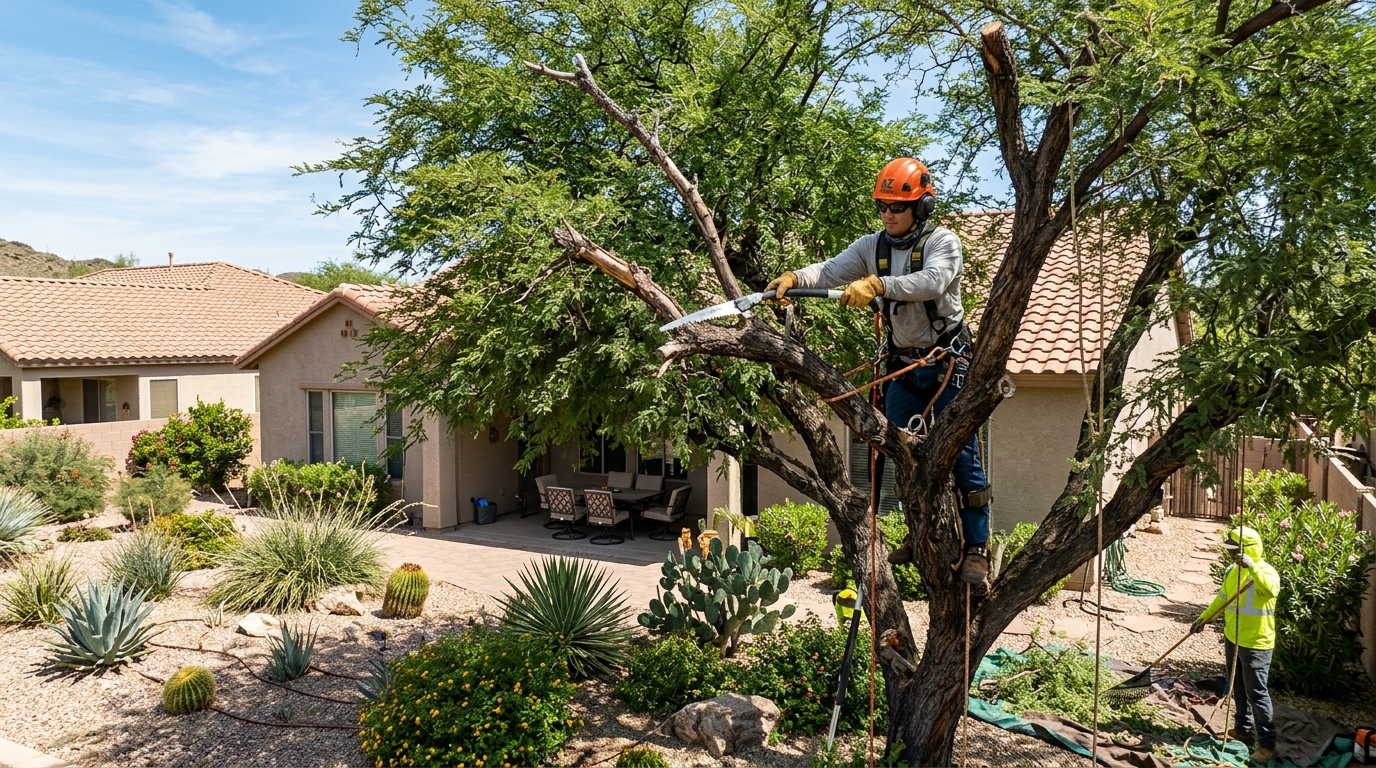
When you contact us about a tree emergency, here is what happens:
Our emergency team is available 24/7 including weekends and holidays. Response time depends on current demand and your location within our service area. During active monsoon events, call volume increases significantly  we prioritize based on the severity of the hazard and the immediate risk to people and structures.
No. Fallen trees and broken limbs can be under tension from their own weight, and attempting to cut or move them without proper equipment creates serious injury risk. Additionally, trees near power lines should never be touched. Stay clear of the area and contact us for professional removal.
In some cases, yes. If the trunk is intact and the main structural framework is sound, corrective pruning can remove damaged branches and allow the tree to recover over subsequent growing seasons. However, if the trunk is split, more than half the crown is lost, or the root system is compromised, removal is typically the safer and more practical option. Our follow-up assessment evaluates these factors.
Many homeowner's insurance policies cover tree removal when a tree has fallen on an insured structure (home, garage, fence). Coverage varies by policy and carrier. We recommend contacting your insurance provider to understand your specific coverage. We can provide documentation and photos of the emergency and completed work to support your claim.
Contact us immediately for storm damage, fallen trees, broken limbs, or any tree-related emergency. Our team responds around the clock to stabilize hazards and protect your property.