Mechanical stump removal for residential and commercial properties across Phoenix, AZ and Maricopa County. We grind stumps below grade and prepare the site for replanting, hardscape, or landscape use.
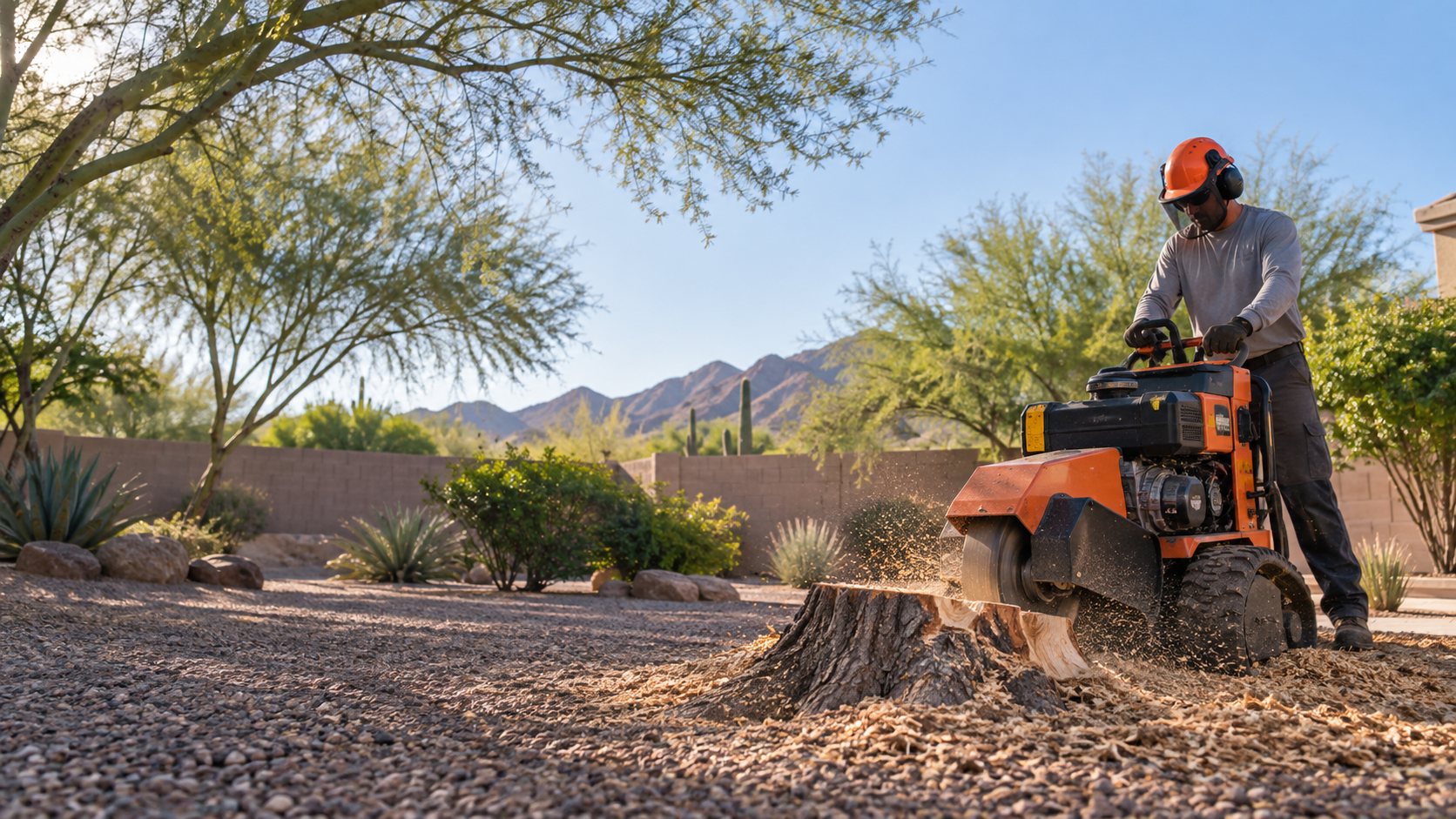
After a tree is removed, the remaining stump presents several practical concerns. Stumps are trip hazards for foot traffic, obstacles for lawn maintenance and landscaping equipment, and they occupy space that could be used for replanting or other landscape features. In the Phoenix, Arizona desert environment, old stumps can also attract termites and other wood-boring insects that may eventually migrate toward nearby structures.
Our stump grinding service uses specialized equipment to mechanically grind the stump below the surrounding grade level. The depth of grinding depends on your goals — basic grinding for general use, or deeper grinding if you plan to replant a new tree in the same location. We discuss options, depth, cleanup, and site preparation before work begins so you know exactly what the finished result will look like.
Stump grinding can be performed as part of a tree removal project or as a standalone service for stumps left behind from previous removals.
Several factors affect how a stump grinding project is performed. We assess these during the on-site evaluation to provide an accurate scope and estimate.
Diameter, wood hardness, and root spread determine equipment needs and grinding time. Hardwood stumps from species like mesquite and ironwood take longer to grind than softer species like mulberry or ash.
Standard grinding removes the stump 6 to 8 inches below grade. If you plan to replant in the same spot, deeper grinding — 12 to 18 inches — may be appropriate to accommodate new root growth and soil backfill.
Side-yard gates, block walls, pools, irrigation lines, and utility infrastructure near the stump affect equipment access and the approach we use. Narrow-access grinders are available for tight spaces.
Some stumps have visible surface roots extending across driveways, sidewalks, or lawn areas. We can grind major surface roots within a specified radius if they create trip hazards or interfere with hardscape.
Grinding produces wood chips and soil mixture. We can leave chips in the hole as natural fill, remove them from the property, or backfill with topsoil and grade the area smooth — depending on your preference.
Before grinding, we verify the location of underground utilities, irrigation lines, and any known infrastructure near the stump site. This protects both the equipment and your property's underground systems.
Describe the stump — size, location, access, and what you want the area to look like afterward.
We evaluate the stump, check access, identify underground concerns, and discuss grinding depth and cleanup options.
Surrounding landscaping and structures are protected. The work area is cleared and equipment is positioned.
The stump is ground below grade to the agreed-upon depth. Surface roots are addressed as specified in the scope.
Chips are managed per your preference — left as fill, removed, or backfilled with soil. The area is graded and cleaned.
Yes, in most cases. Deeper grinding (12–18 inches below grade) provides adequate room for new root development. After grinding, the area is backfilled with soil, and the new tree is planted in fresh growing medium. Species selection and planting depth are important considerations — we can advise on what works well in the Phoenix, AZ climate.
Standard grinding removes the stump 6 to 8 inches below the surrounding soil level. This is sufficient for general landscape use, gravel cover, or planting grass over the area. For replanting a tree in the same location, we recommend grinding 12 to 18 inches deep to accommodate the new root ball and fresh soil.
In most cases, once the tree and stump are removed, the root system will not produce new growth. The remaining roots below ground will decompose naturally over time. Some species may send up sprouts from lateral roots — if this occurs, sprout management can address the issue.
Yes. We operate compact grinders that fit through standard side gates (36 inches or wider). For extremely tight access, we assess the situation during the on-site visit and determine the best approach. Gate width, distance to the stump, and any obstacles along the path are all evaluated.
Contact us to schedule stump grinding. We evaluate the stump, discuss depth and cleanup options, and provide a written estimate before any work begins.