Evaluation of tree stress, drought damage, canopy decline, pest symptoms, root-zone concerns, and irrigation issues for residential and commercial properties across Phoenix, AZ.
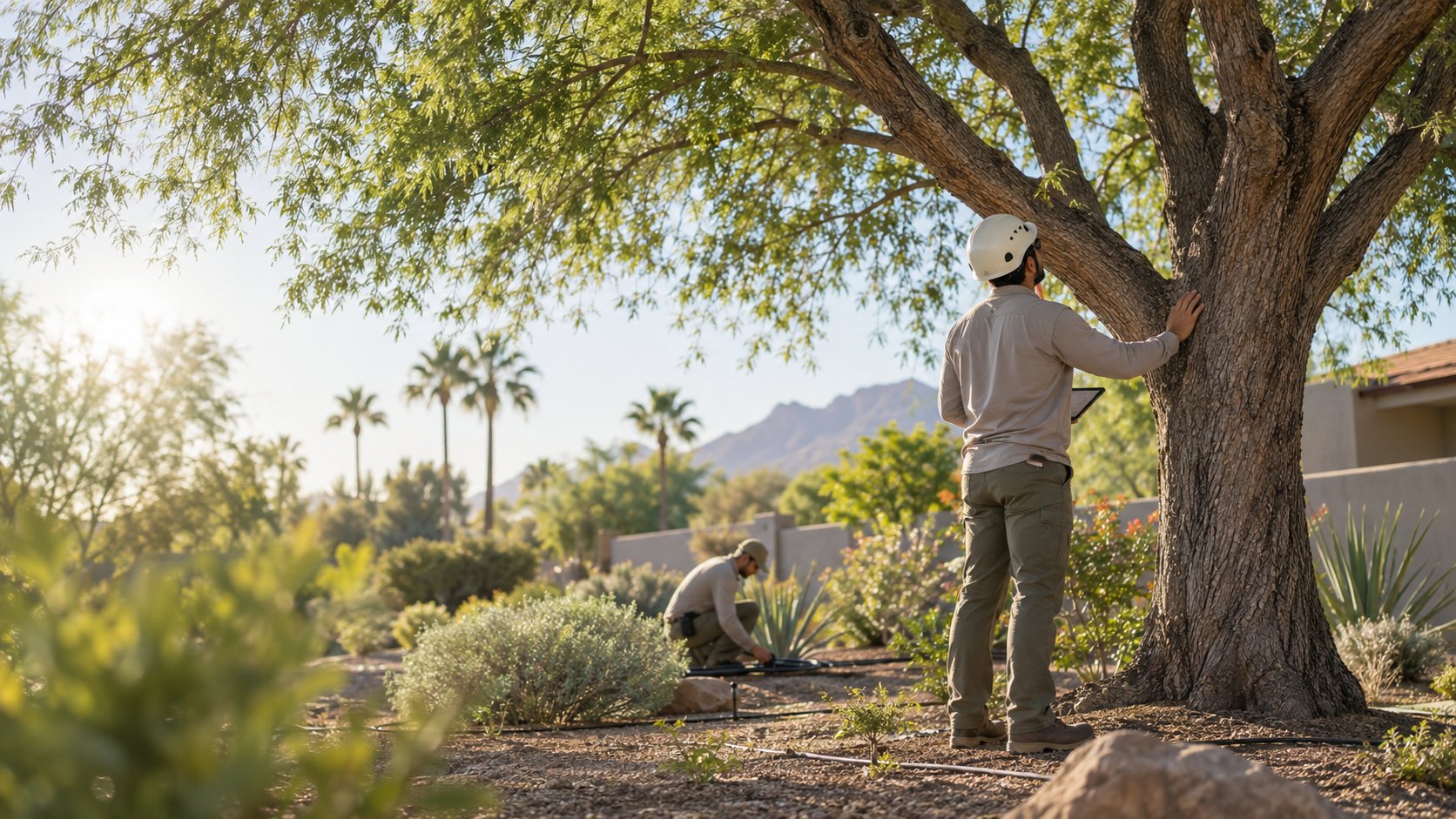
When a tree starts showing signs of stress — yellowing leaves, thinning canopy, premature leaf drop, branch dieback, or discoloration — the visible symptoms are often the result of underlying conditions that are not immediately obvious. Drought stress, irrigation problems, root-zone damage, soil compaction, pest activity, and heat exposure can all produce similar-looking symptoms with very different causes and solutions.
Our tree health evaluation process looks beyond the canopy to examine the whole picture: root-zone condition, soil characteristics, irrigation delivery, trunk integrity, branch health, and the surrounding landscape context. The goal is to identify what is causing the decline and determine whether the tree can be supported through changes in care, or whether the damage is too advanced for preservation to be practical.
We do not guarantee specific outcomes — tree health involves complex biological processes influenced by factors beyond anyone's complete control. What we provide is an honest, observation-based assessment with actionable recommendations that give the tree the best chance of recovery where preservation is a realistic option.
Trees communicate stress through visible changes. These symptoms do not confirm a specific diagnosis, but they indicate that professional evaluation may be warranted.
Leaf yellowing may indicate iron chlorosis (common in alkaline Phoenix, AZ soils), drought stress, overwatering, or nutrient deficiency. The pattern and distribution of yellowing helps narrow the cause.
Progressive loss of foliage density and death of branch tips working inward from the canopy edge. This often signals root-zone problems, chronic drought, or vascular issues within the tree.
Trees dropping leaves outside their normal seasonal cycle. In Phoenix, Arizona, this often relates to water stress — either insufficient irrigation or overwatering that has compromised root health.
Vertical bark cracks or patches of dead, peeling bark on sun-exposed sides of the trunk. Common after heavy pruning exposes previously shaded bark to intense Phoenix, AZ sun.
Boring holes, sawdust-like frass, webbing, unusual growths, or oozing sap may indicate pest or disease presence. The significance depends on the species of tree and the type and extent of the infestation.
Fungal fruiting bodies at the base, on the trunk, or on root flares may indicate internal decay. The type of fungus and its location help determine the extent of concern.
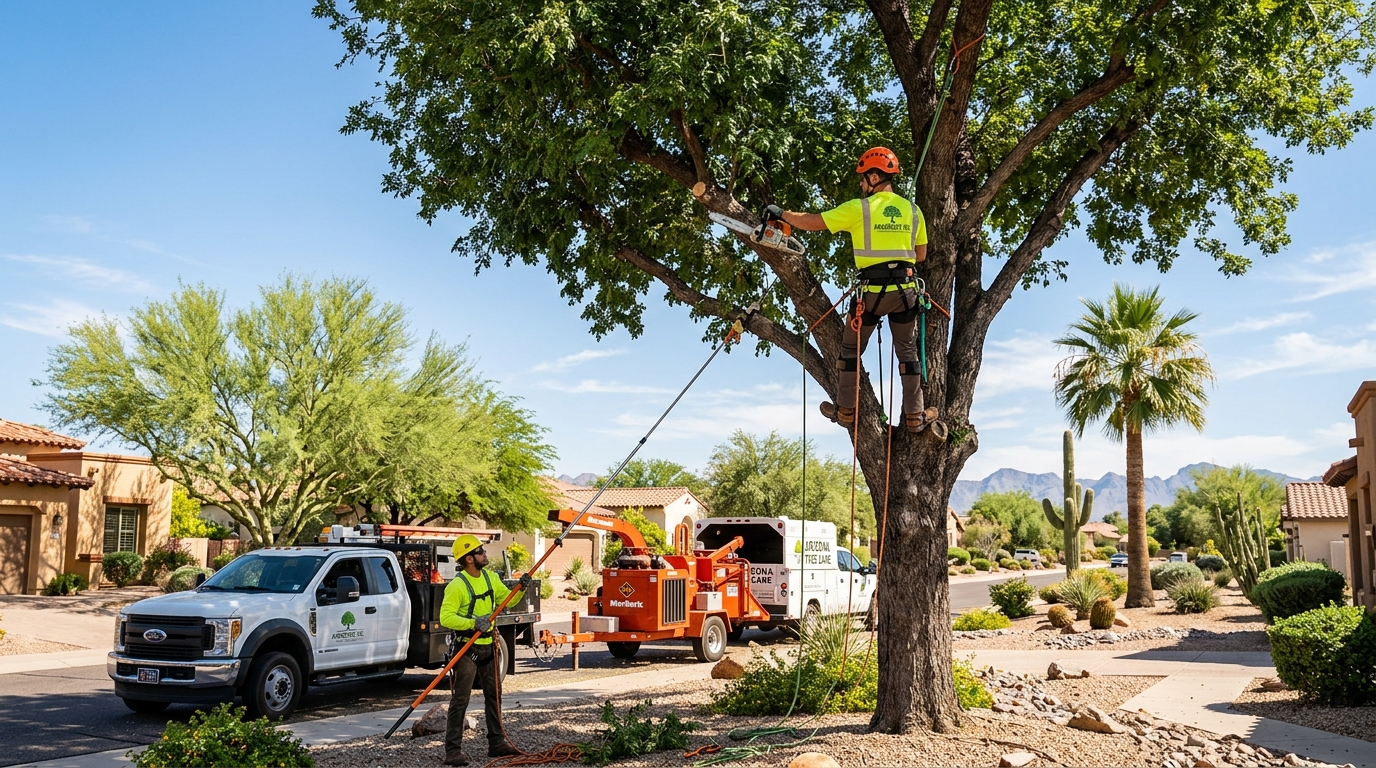
Our on-site evaluation examines multiple aspects of the tree and its growing environment to build a complete picture of what is happening and what can be done.
Many trees can recover from moderate drought stress if the underlying watering issue is corrected and the tree has not lost too much of its root system or canopy. Recovery takes time — often one or more growing seasons — and depends on species, age, and the extent of damage. Severely drought-stressed trees with extensive canopy loss may not fully recover.
Yellowing leaves in Phoenix, Arizona can result from several causes including iron chlorosis (very common in alkaline desert soils), overwatering, underwatering, root damage, or nutrient deficiency. The distribution pattern — uniform vs. interveinal, new growth vs. old — helps identify the most likely cause. An on-site evaluation provides the best assessment.
If your tree has been showing declining health for more than a few weeks — thinning canopy, persistent leaf drop, discoloration, or branch death — scheduling an evaluation sooner is better. Early identification of the problem gives the tree more time and a better chance to respond to corrective measures. Waiting until the tree is severely compromised limits options.
We provide on-site assessments with actionable recommendations. Depending on the findings, recommendations may include irrigation adjustments, pruning work (which we perform), soil management practices, or referral to a licensed pest-control professional if targeted treatments are needed. Our primary role is identifying the problem and recommending the most appropriate course of action.
Contact us to schedule an on-site tree health evaluation. We assess the tree, identify likely causes of decline, and provide practical recommendations.