Safe removal of dead fronds, seed stalks, and accumulated debris from fan palms, date palms, and other palm species across Phoenix, AZ residential and commercial properties.
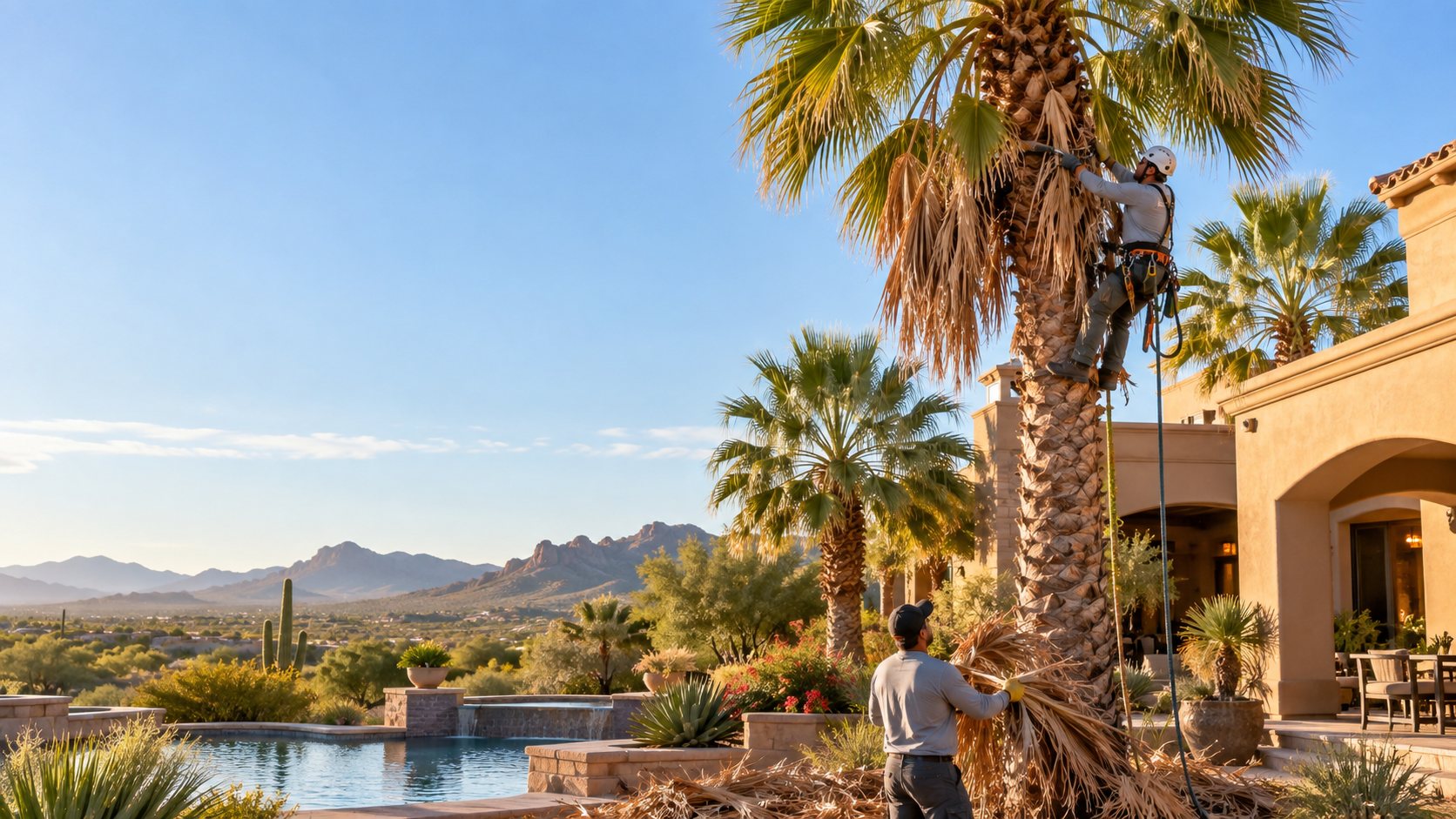
Palms are among the most recognizable landscape features in the Phoenix, AZ metro area. Mexican fan palms, California fan palms, date palms, queen palms, and Mediterranean fan palms are planted throughout residential neighborhoods, commercial properties, and public spaces. Unlike typical shade trees, palms require a different approach to maintenance  one focused on frond management, access logistics, and protecting the growing point.
Dead fronds accumulate on the trunk and create a "skirt" that harbors pests, debris, and fire risk. Seed stalks produce heavy seed clusters that drop onto walkways and vehicles. Loose fronds and petioles can detach during monsoon winds and become hazardous projectiles. Regular palm trimming addresses these concerns while preserving the palm's health and appearance.
Our crew uses safe access methods  including lifts, climbing equipment, and ladders appropriate for the palm height  to remove dead and dying fronds, seed stalks, and loose material. We avoid over-trimming, which removes green fronds that the palm needs for photosynthesis and exposes the trunk to unnecessary stress. The goal is a clean, safe palm that retains adequate canopy for continued healthy growth.
Each palm species has specific characteristics that affect how trimming is performed, how often maintenance is needed, and what access is required.
The most common tall palm in Phoenix, Arizona. Can exceed 80 feet. Produces heavy frond skirts and abundant seed stalks. Requires periodic trimming and safe high-reach access equipment.
Similar to Mexican fan palm but with a thicker trunk and slower growth. Produces dense frond skirts that accumulate significantly if not maintained. Common in older Phoenix, AZ neighborhoods.
Medjool, Deglet Noor, and ornamental date palms are common in Phoenix, Arizona landscapes. They produce heavy fruit clusters and have sharp spines on frond bases that require careful handling during trimming.
A feather-leaved palm popular in irrigated Phoenix, AZ landscapes. Queen palms drop fronds and seed clusters frequently. Regular cleanup keeps the area beneath the palm clear and presentable.
A multi-trunk, shorter palm used as an ornamental accent. Lower height makes access easier, but the dense, clustered growth pattern requires careful trimming to maintain shape without damaging emerging fronds.
A compact ornamental palm often planted in courtyards and pool areas. Trimming removes old fronds and seed clusters from the dense canopy. The smaller size makes this palm easier to maintain.
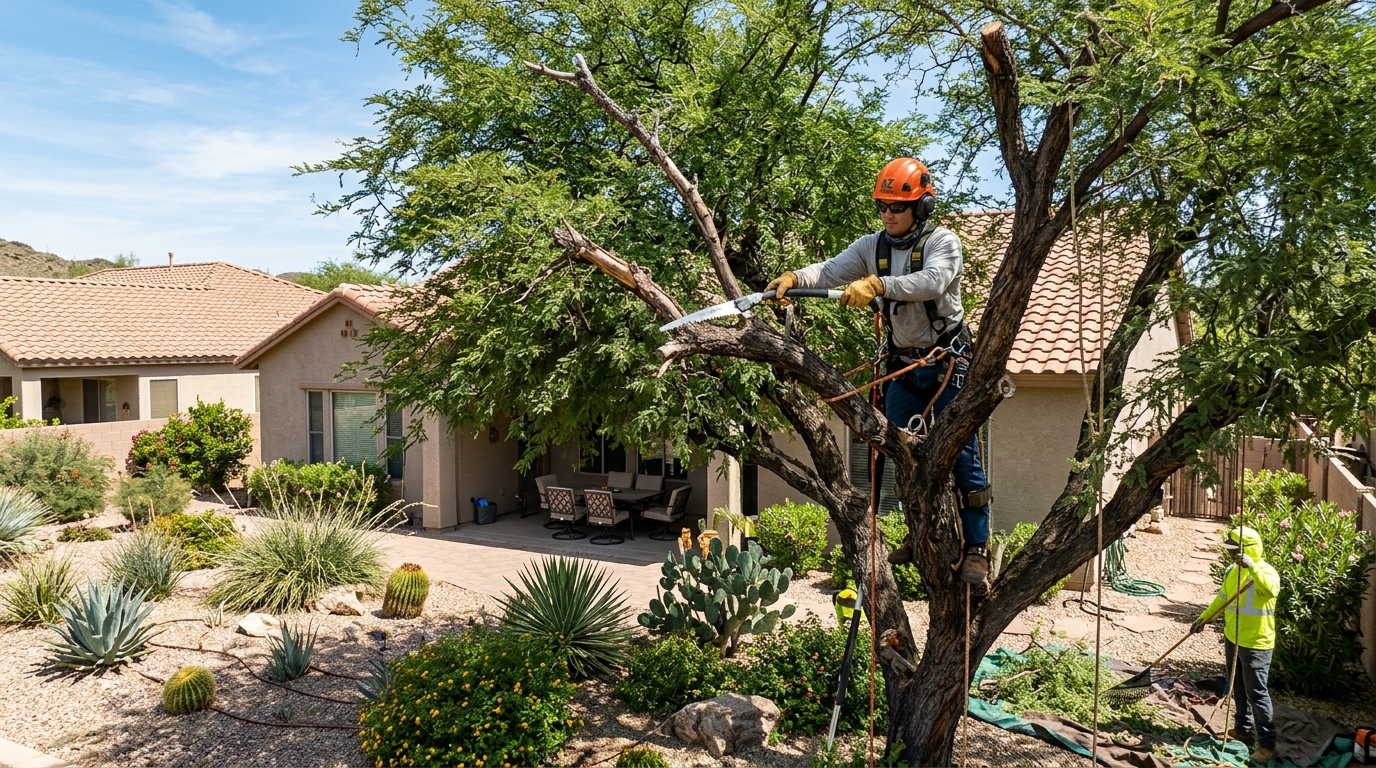
A common mistake in palm maintenance is removing too many fronds  trimming live, green fronds beyond what is dead or dying. This practice, sometimes called "hurricane cutting," is harmful for several reasons:
We trim to the appropriate level  removing dead, dying, and brown fronds while retaining adequate green canopy for the palm's continued health.
Most palms in Phoenix benefit from trimming once or twice per year. Fan palms with heavy seed production may need annual maintenance, while slower-growing ornamental palms may need less frequent attention. We recommend scheduling trimming before monsoon season to remove loose material that could detach during high winds.
Yes. We maintain palms of all heights, including Mexican fan palms that can exceed 80 feet. Safe access for tall palms is achieved using aerial lifts and specialized climbing equipment. We assess each palm's height, location, and surroundings to determine the safest access method.
Yes. Seed stalks and fruit clusters are removed as part of our standard palm trimming service. Date palm fruit clusters can be heavy and messy  removing them before they ripen prevents staining on walkways, driveways, and pool decks below.
Removing dead fronds from the skirt is not harmful  those fronds are no longer photosynthetically active. However, removing live green fronds beyond what is dead is detrimental. We remove the dead frond skirt and any loose material while retaining adequate green canopy for the palm's health. The result is a clean, well-maintained appearance without compromising the palm.
Contact us to schedule palm maintenance. We evaluate each palm's condition, discuss frond removal scope, and provide a clear estimate before work begins.